In part two we explored the science of why time outdoors restores focus, reduces stress and fosters creative thinking. Many leaders hear these benefits and assume that simply taking their team for a hike will fix communication issues or misaligned goals. Nature is a powerful catalyst, but it's only half the equation. Without skilled facilitation, a nature‑centred retreat may be a pleasant day out that fades as soon as everyone opens their laptop on Monday morning.
From experience to insight
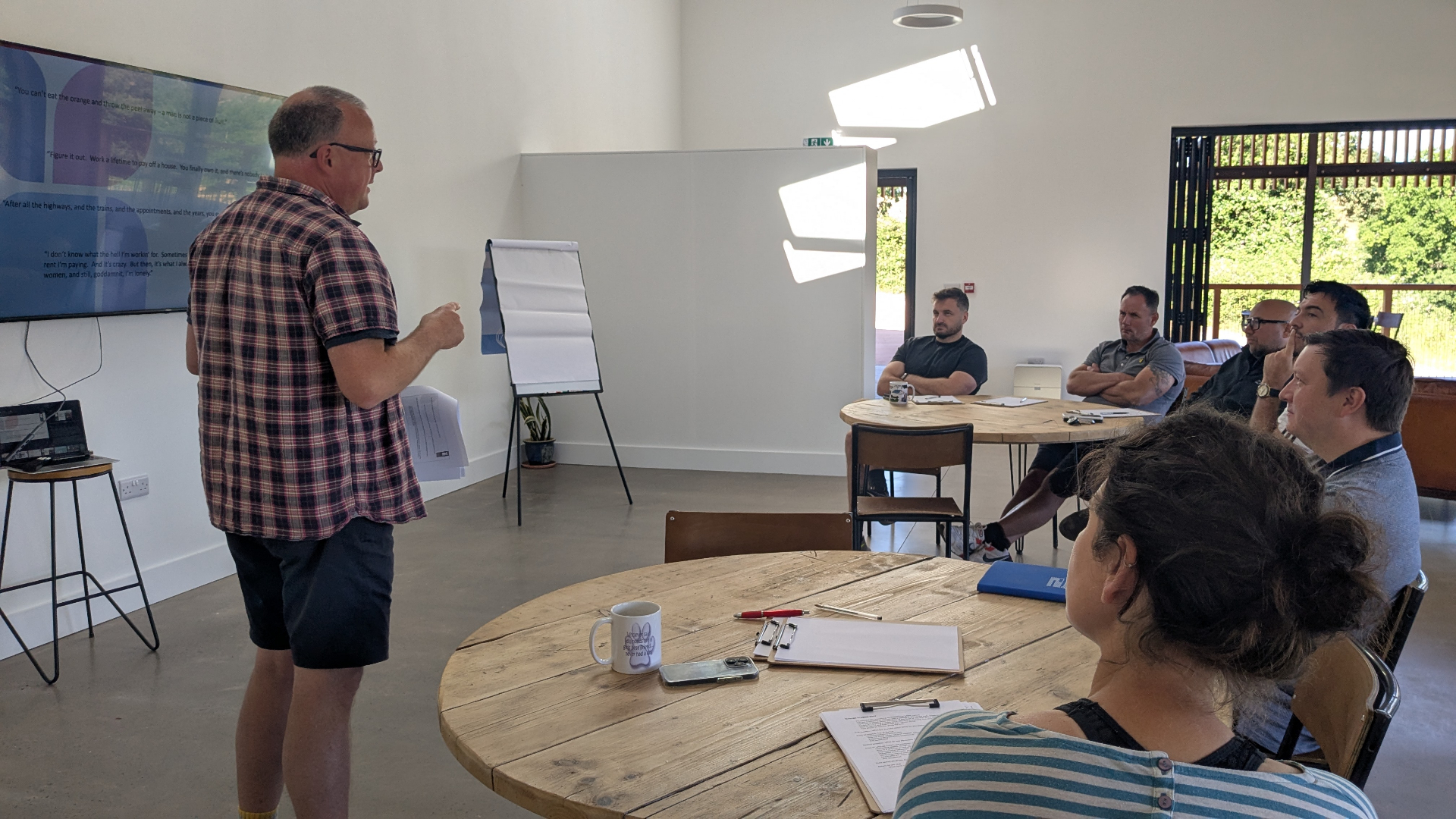
Unstructured outdoor activities can loosen people up, but real change requires reflection and integration. Facilitation provides the bridge between experience and insight. A skilled facilitator creates the conditions for honest dialogue, ensures every voice is heard and helps the group make sense of what they're noticing in the moment. Research on psychological safety shows that team members contribute more authentically when they feel safe to speak up and make mistakes. Facilitation isn't about forcing outcomes; it's about guiding the group to surface what matters and connect it to their work.
Think of facilitation as the difference between going for a walk and going on a purposeful journey. A facilitator helps your team:
- Pause and notice. In the quiet of a rewilded landscape, people start to pay attention to their thoughts and feelings. A facilitator encourages them to articulate those observations.
- Connect individual insights to collective goals. Reflection prompts and dialogue turn personal "aha" moments into shared understanding about how the team functions.
- Challenge assumptions. Skilled questioning uncovers assumptions that may be holding the team back and invites fresh perspectives.
- Translate insights into action. Every retreat should end with agreed next steps, ownership and timelines, otherwise momentum fizzles out.
Creating psychological safety outdoors
Nature can lower stress and encourage openness, yet teams may still carry their usual hierarchies and habits into the field. A facilitator actively cultivates psychological safety by modelling curiosity, inviting quieter voices into the conversation and setting ground rules that encourage respectful challenge. Amy Edmondson of Harvard Business School defined psychological safety as a shared belief that a team is safe for interpersonal risk taking, and showed that it is what enables people to speak up, ask for help and admit mistakes. Without it, difficult topics remain unspoken and the retreat becomes another exercise in polite agreement.
An experienced facilitator also knows when to let silence do the work and when to guide. For example, during a reflective walk, participants may need space to process their thoughts. Later, in a group discussion, the facilitator might use a circle format to ensure everyone has an equal opportunity to share. These techniques create a sense of equality that helps break down hierarchical barriers and build trust.
Tailoring the experience to your team
Every team has its own ecosystem: unique personalities, power dynamics and aspirations. A one‑size‑fits‑all agenda won't address the specific issues your group faces. Good facilitation starts long before the retreat begins. At Wilder Away Days we use a Discovery & Design phase to explore your context, challenges and goals. We then co‑create a retreat that weaves together nature immersion and facilitated dialogue in a way that resonates with your team.
Here's what a bespoke approach might look like:
- Discovery – meeting with key stakeholders to understand your organisational context, past off‑sites and desired outcomes.
- Design – crafting sessions that blend reflective walks, purposeful conservation activities and structured conversations aligned to your goals.
- Facilitated experience – guiding your team through the retreat, ensuring psychological safety and adjusting the pace as needed.
- Integration – helping the group translate insights into concrete next steps, owners and timelines so momentum continues.
By honouring the rhythms of your team, you avoid the "forced fun" that often plagues traditional away days and instead create space for genuine connection and growth.
When facilitation makes the difference
Consider a sales team coming off a period of rapid change. On paper, they were performing well, but their culture had become dominated by a "you're only as good as your last sale" mentality. Rather than prescribing generic trust falls or meditation sessions, we designed an overnight retreat that addressed the team's real challenges. Discussions about identity and wellbeing were coupled with rewilding tasks, shared meals and time around a fire. Skilled facilitation helped team members voice unspoken concerns and identify ways to support one another. The result wasn't just a memorable experience, it was a shift in how they related back at work.
This kind of transformation doesn't happen by accident. It emerges when nature's restorative effects are combined with the structure and psychological safety a facilitator provides.
Looking forward
Part four takes you inside a Wilder Away Day, showing how our 80‑acre rewilding site and evidence‑based approach deliver real results. If you would like to explore how a facilitated, nature‑centred retreat could serve your team, see what is involved in a corporate away day or book a discovery call.
Part three of a four‑part series. Previously: The science behind nature‑centred retreats. Next: Inside a Wilder Away Day.