A practical guide
How to plan a team retreat
What a team retreat is, when it is worth doing, what it costs in the UK, and how to plan one that actually changes something.
What a team retreat is
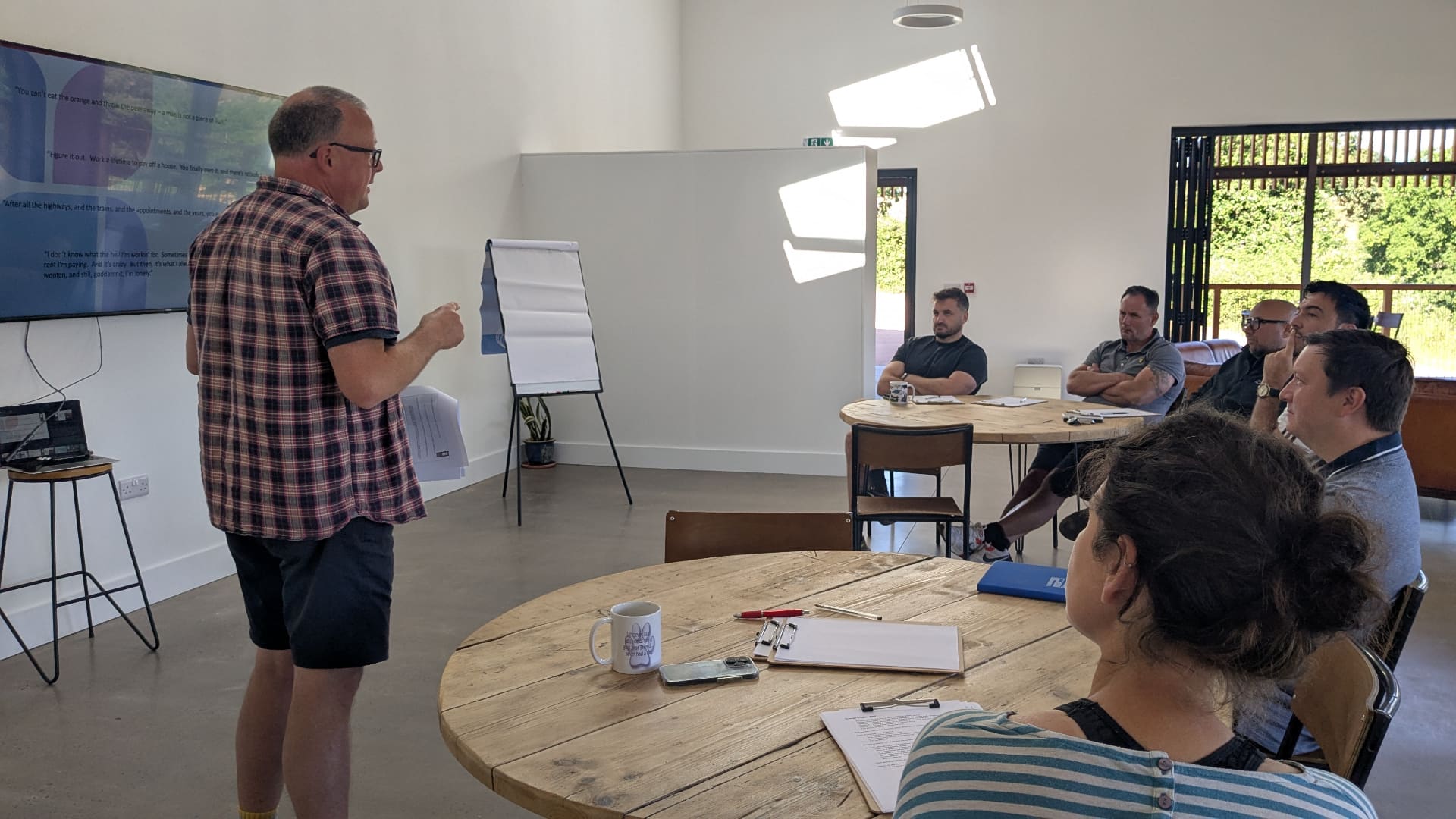
A team retreat is dedicated time away from the usual workplace where a team works on how it operates rather than on day-to-day delivery. It usually runs for one or two days, it is facilitated, and it has one clear purpose: strategy, alignment, repairing trust, or wellbeing.
The words retreat, away day and offsite are used interchangeably. In practice an away day is a single day out of the office, an offsite is often a working session held elsewhere, and a retreat implies a deeper reset, frequently with an overnight stay, where reflection matters as much as output.
The rest of this guide covers when a retreat is the right call, what it costs, how to plan one, and how to design a day that holds up once everyone is back at their desks.
When a retreat is the right call
- The team has changed shape: a merger, a reorg, rapid growth, or a new leader.
- A decision keeps being deferred because the real conversation happens in corridors.
- Trust has taken a knock and normal meetings cannot hold the subject.
- The team is distributed and has never worked in the same room.
- The strategy is clear at the top and fuzzy everywhere else.
- People are tired, delivering, and quietly running out of road.
When it is not
- You need to deliver information. Send it in writing instead.
- The decision is already made and the retreat is there to sell it.
- One relationship is the problem. Deal with that directly first.
- There is no capacity to act on anything the day surfaces.
Step 1: decide the purpose
Write one sentence describing what has to be different afterwards. If you cannot, the day will drift. Most retreats fall into four purposes.
Strategy and direction
Align a leadership team on where you are going and what you will stop doing.
Team repair
Surface what is unsaid, in conditions where it can be said safely and usefully.
Leadership development
Work on how the team leads together rather than on individual skills.
Wellbeing and recovery
Give a team that has been running hard genuine time to reset.
Our away day formats are built around these four purposes, so it is worth deciding yours before you look at options.
Step 2: choose the format
Half day
Enough for one focused question with a small team. Not enough for anything relational.
One full day
The most common choice. Time to open a subject properly, reach decisions and close the day well.
Two days with an overnight
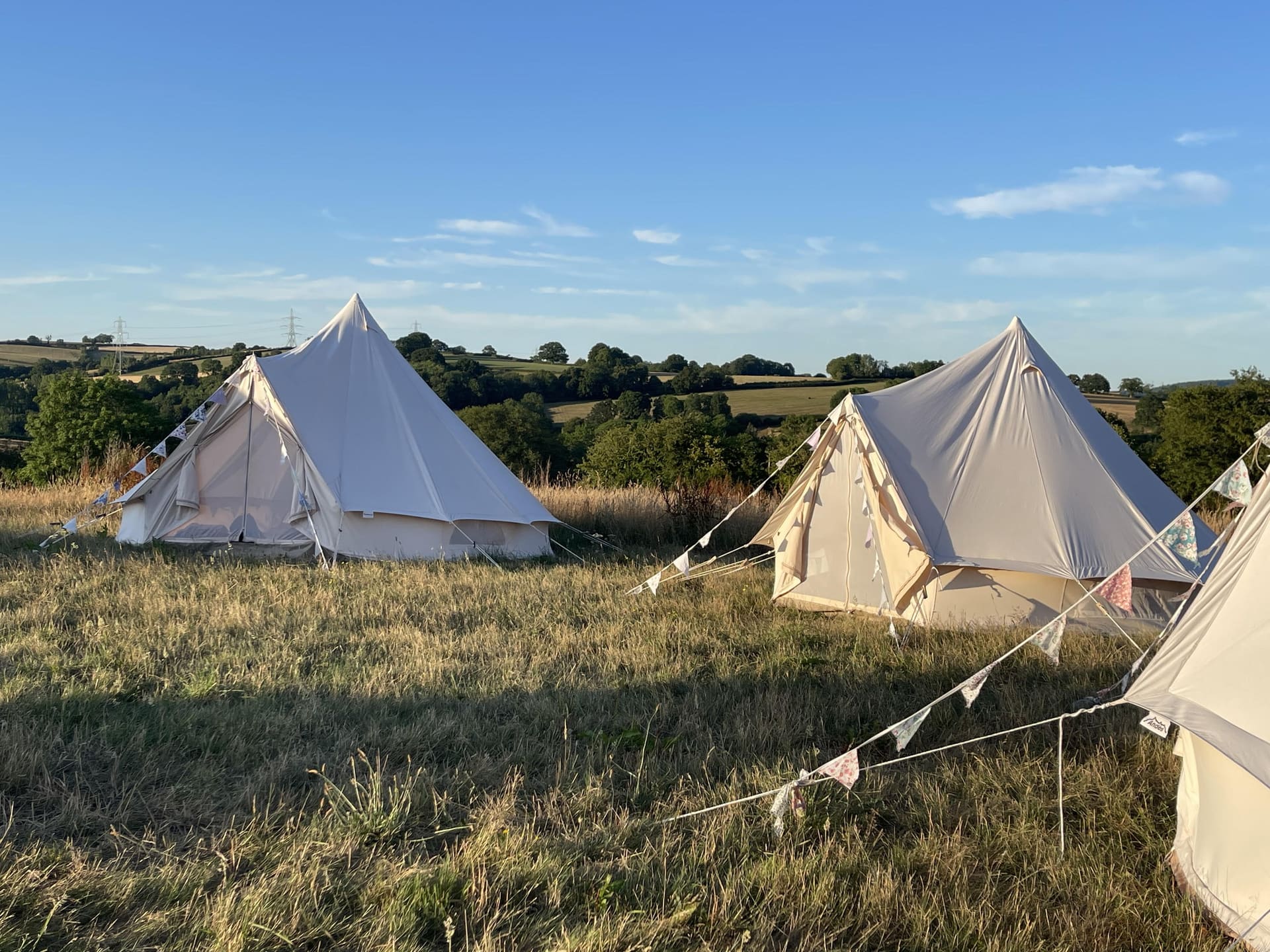
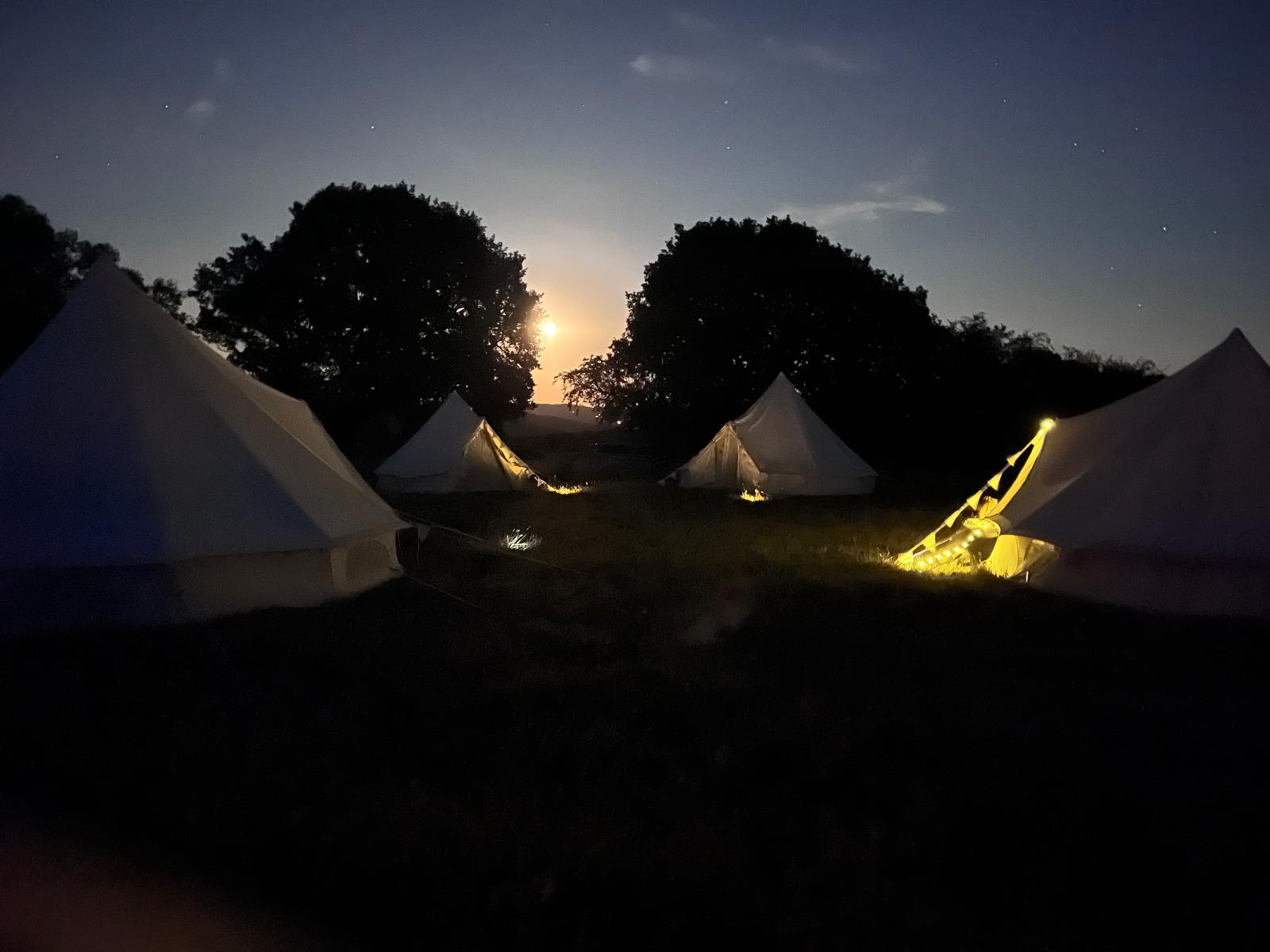
The evening is where the useful conversations tend to happen. On our land that means bell tents in season, or rooms arranged with local B&Bs and hotels outside the camping season.
Step 3: choose the location
A hotel meeting room keeps people in work mode. Somewhere genuinely different changes how people speak to each other, which is the whole point of leaving the office.
Aim for somewhere reachable in roughly two hours for most of the team, with indoor space for weather, outdoor space to walk, and enough privacy that nobody is overheard. Ask what happens if it rains before you book anything.
Ours is an 80-acre rewilding project in Monmouthshire, South Wales, within easy reach of Bristol, Cardiff and Newport. You can see the detail on the venue page and travel information.
Step 4: build the budget
Our own pricing, so you have a real reference point rather than a range:
Standard away day
From £1,000 + VAT
A full facilitated day on the land, for teams of 4 to 20+.
Two-day experience
From £1,750 + VAT
The day extended overnight, with a shared evening meal and breakfast. Accommodation is arranged separately and is not included.
Registered not-for-profit organisations are offered a 50% discount. Full detail is on the pricing page. Our away day cost calculator will give you a per-head figure to start from.
Also budget for
- Travel for the whole team, including anyone flying in
- Accommodation, if the format is overnight and outside the camping season
- Food beyond what the venue includes
- The cost of the team being out of delivery for a day or two
Step 5: the planning timeline
8 weeks out
Agree the purpose and the one question the retreat must answer. Set the budget and hold the dates.
6 weeks out
Book the venue and facilitator. Confirm the format: one day, or two days with an overnight.
4 weeks out
Gather input from the team, anonymously if the topic is sensitive. Use it to shape the design.
2 weeks out
Share the purpose, timings, travel and what to bring. Tell people what will not be on the agenda.
1 week out
Confirm dietary needs, accessibility requirements and travel arrangements.
On the day
Start with purpose, keep the pace generous, and finish with named owners and dates.
2 weeks after
Review the commitments in a normal team meeting. This is the step most teams skip.
Step 6: design a day that works
- Open with why you are here and what will happen to anything raised.
- Set out how the group will work together before the first hard subject.
- Alternate: whole group, pairs, solo, whole group. Nobody thinks well in a circle for six hours.
- Walk. Difficult conversations are easier side by side than face to face.
- Leave real gaps. The corridor conversation is the retreat.
- Close with decisions, owners and dates, written down while everyone is present.
Our days are led by a clinical psychologist, which is the difference between a pleasant day out and one where the group dynamics are made visible and useful. More on how we work.
Common mistakes
- Filling every hour. The value usually appears in the unscheduled space.
- Treating it as a reward rather than work. Teams sense the difference immediately.
- Letting the most senior person facilitate their own team's hardest conversation.
- Choosing the venue first and the purpose second.
- Confusing entertainment with connection. Activities help only when they serve the purpose.
- No follow-up. Commitments made away from the office quietly expire without a review date.
Measuring whether it worked
Ask people, before and again six weeks later, how confident they are in the direction, how safe it feels to disagree, and how clear they are on who decides what. Movement on those three questions tells you more than a satisfaction score collected on the day.
Then check the commitments. If they are still live six weeks on, the retreat did its job.
Team retreat planning checklist
- A single, written purpose everyone has seen
- Dates held and the whole team confirmed
- Budget agreed, including travel and food
- Venue booked, with a wet-weather plan
- Facilitator briefed on the real dynamics, not just the agenda
- Pre-retreat input gathered from the team
- Accessibility and dietary needs collected
- Agenda with more space in it than feels comfortable
- A method for capturing decisions on the day
- A follow-up date in the diary before you go
Planning for a distributed team? See our guide to remote team retreats.
Team retreat FAQs
What is a team retreat?
A team retreat is dedicated time away from the usual workplace where a team works on how it operates rather than on day-to-day delivery. It typically runs for one or two days, is facilitated, and has a clear purpose such as strategy, alignment, team repair or wellbeing.
What is the difference between a team retreat, an away day and an offsite?
The terms overlap. An away day is usually a single day away from the office. An offsite is often a working session held somewhere else, sometimes still quite operational. A retreat implies a deeper reset, frequently overnight, with facilitated reflection rather than a packed agenda.
How long should a team retreat be?
One full day is enough to align on a single clear question. Two days with an overnight gives time for the harder conversations to surface and settle, which is why teams working on trust or strategy usually choose it.
How much does a team retreat cost in the UK?
Costs vary widely with venue, facilitation and accommodation. Our facilitated away days start from £1,000 + VAT, and the two-day experience from £1,750 + VAT, for teams of 4 to 20+. Budget separately for travel, food and any accommodation.
How far in advance should we plan?
Six to eight weeks is comfortable for a single day. Allow ten to twelve weeks for an overnight retreat, or for any group where diaries are hard to align.
Do we need an external facilitator?
Not always, but if a leader facilitates they cannot fully take part, and the team tends to defer to them. An external facilitator is most valuable when the subject is contested, emotive, or has been avoided before.
Talk through your retreat
A 20-minute discovery call, or send us the details and we will come back to you.